
After teaching the topic of Energy and Forces, most schools will move on to the topic of Interactions, also known as Web of Life.
Read Also
In this topic, students will learn:
- Factors affecting the survival of an organism, such as:
- Number of predators
- Number of prey
- Man-made and natural activities
- The different roles that different organisms play in a food web
- How organisms are dependent on each other in a community (Interdependence)
In today’s article, the focus will be on Point 3 – how organisms are interdependent.
What does “interdependence” mean?
“When organisms are interdependent, it means that the organisms are ecologically reliant on each other.”
Two groups of organisms that are commonly interdependent are animals and plants.
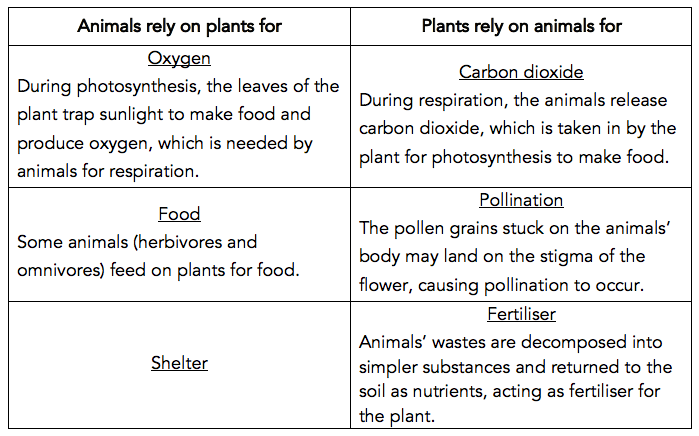
With this information, let us take a look at the question below.
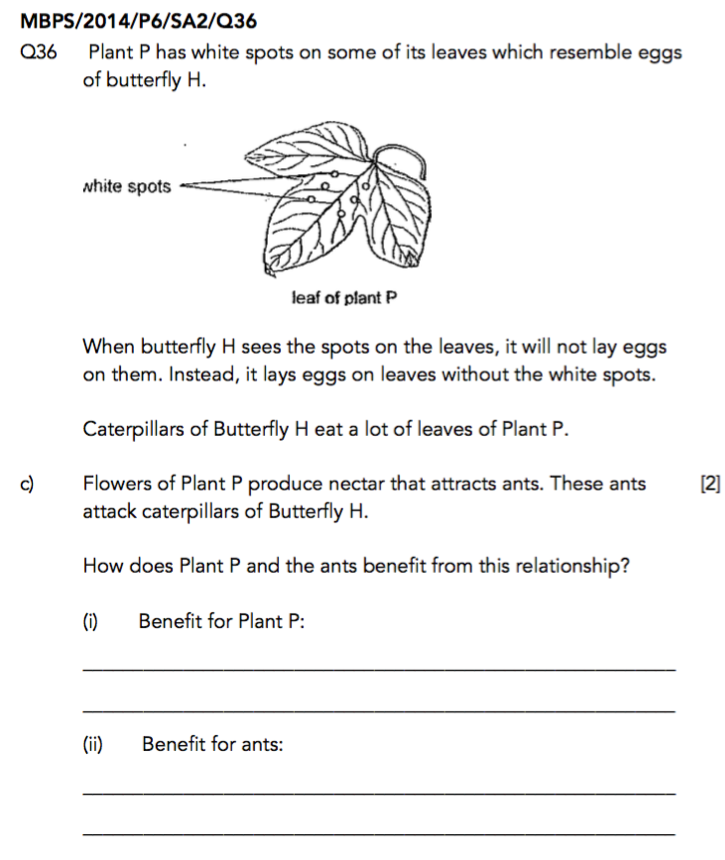
Question
Thought Process
Butterfly H lays eggs on the leaves of Plant P that do not have the white spots. When the eggs hatch, the caterpillars of butterfly H feed on the leaves of Plant P.
This causes damage to Plant P as it will have fewer leaves to trap sunlight in the process of photosynthesis to make food, causing Plant P to die.
It is also mentioned in the question that the flowers of Plant P produce nectar that attracts ants. The nectar serves as food for the ants.
The ants attack the caterpillars of Butterfly H that eat a lot of Plant P’s leaves. This will reduce the number of caterpillars feeding on the leaves, enabling Plant P to have more leaves to trap sunlight in the process of photosynthesis to make more food to survive.
From this information, we can see that the ants and Plant P are interdependent. Plant P provides nectar as food for the ants and the ants attack the caterpillars that are harming Plant P.
Answer
Hence, the answer for part (c) should be phrased as:
Benefit for Plant P: The ants will attack the caterpillars feeding on Plant P’s leaves, allowing it to have more leaves to trap sunlight in the process of photosynthesis to make food to survive.
Benefit for ants: The ants have nectar from the flowers of Plant P as food.
In Conclusion…
When your child encounters questions testing the concept of interdependence, they must have the right thought processes.
They should be able to explain clearly what each organism does or provides and how doing so brings benefit to the other organism.
By keeping this in mind, they should have no problems tackling this concept in examinations!
3 comments